The difference between a conspiracy and a conspiracy theory is the proof. An uncovered conspiracy will have credible evidence. A conspiracy theory will take great leaps from the evidence proffered to the theory proposed, usually shifting its story to fit new evidence in ways that conflict with the old evidence. A circumstance that rarely bothers the true believers, who follow conspiracy theories on alternative, legacy and social media, like soap operas. Since conspiracy theories are about secret knowledge, they tend to come in three strands, often intertwined: political, medical and religious. Conspiracy theories are the occult, while conspiracies are science, with either capable of starting off as one and becoming the other, or moving between the two depending on the climate of opinion.
For fiction writers, conspiracies are great fun. They’re mostly an excuse for a protagonist to run around attractive locations being hunted by the antagonists and falling in love. They’re also a way of expressing loyalty to the status quo as their protagonist saves the country from disruption, or a way of romanticising disruption without risking jail or death. The Elizabethans and Jacobeans forged their Protestant identity by discovering Catholic plots, then complicated it by making the executed Catholic mother of James IV and I a pathetic legend. Gothic writers fled from killer monks in crumbling castles, and loved it. Walter Scott reconciled Scotland to the Union by battling intriguing Templars and Jacobites. Anthony Hope burlesqued the Habsburgs into a Central European Ruritania populated by swashbuckling conspirators. Spy thrillers range from the melancholy romp, The Riddle of the Sands, by gun-runner Erskine Childers, to the wisecracking atrocities in ex-spy Ian Fleming’s James Bond novels. No matter how satiric or outlandish the plot, no one within its story doubts its actuality.
In fiction, conspiracy theories focus on dysfunction. Whether it’s a thriller or a comedy, the central figures are socially isolated, or psychologically disturbed; cranks, nerds, weirdos and psychotics; naifs or anti-heroes, plunged into a world where nothing is certain. At extreme odds with the status quo they’re disbelieved, pathologised and hunted. In the end, they’re more likely to die or disappear; following clues as their cruel fate closes in on them until they’re trapped. In tragedies, they’re betrayed, by their loved ones, or their own natures. In melodramas, they’re engulfed, by disasters or corruption. In the novels of Franz Kafka they never know why their circumstances have dramatically changed. In Decadent horrors, they’re tormented by wan paranormal longings, languidly fretting through their days until a sudden, lurid encounter shocks them into silence. In Cosmic horrors, they find old Gods and degenerate into madness. While the Counter-Culture was a jumble of political cover-ups, medical scandals and supernatural schemes like The Parallax View, Coma or Rosemary’s Baby. The line between fact and fantasy is blurred.

In fiction, conspiracies that are generally acknowledged to have happened by everyone involved in the story provide fairground thrills.
Conspiracy theories that are disbelieved by most of the characters cause extreme anguish.
In society, disagreeing is more dangerous than gawping.
Being involved in a conspiracy, is dangerous and unnerving, but very few people will ever be involved. Conspiracy theories are different. They exist as a kind of dubious lore. Told as true, but with very little to back it up. They spread through communities, and anyone can hear, believe or dispute them. Some of them involve celebrities, world events, governments or Freemasons – people with some political, economic or social power. Others target social misfits or minorities, sometimes assigning them more power than they have or inventing supernatural power that no one has. The oldest and most resonant examples being the blood libel against Jewish people, and the witch hunts.
Which brings me to songs.
Singers and songs exist in a odd place that isn’t acknowledged as fiction, but isn’t acknowledged as non-fiction. In the past, many songs would contain news – directly or in code. Protest songs keep up the tradition. If there’s no obvious protest, songs have their lyrics scoured for autobiographical details. Songs with no obvious autobiographical details are scoured for a message. It has to be about something. And it has to set a good example – or a bad example – for the listener. Empowerment songs, rebellious songs, love songs, diss tracks – whatever the content – however panto the presentation – it’s all taken more literally than a play or a novel. Singers are supposed to believe the words they’re singing, and the price for a gap between their image and their real life can be career ending. The Irish band, Kneecap, are having to explain that they don’t believe in terrorism or killing members of parliament. Mainstream pop star, Katy Perry, is falling between sincere lyrics and flippant visuals. Others like Marilyn Manson are accused of ‘hiding in plain sight’ – pretending their horrors were just a show, when in fact, they were real.
It may be the emotive power of music, the sinister shadow of the Pied Piper or the marketing of sex, drugs and rock’n’roll, making us hold singers to higher (and lower) standards than other artists, but whether the gap between their art and their real life is serious or trivial, whether the flack is deserved or undeserved, proven or unproven, they have a much shorter creative leash – and fall harder when they fall.
Some of the flack comes from conspiracy theories. Killer cult-leader, Charlie Manson, believed that the Beatles were sending him messages about a coming race war in songs like Helter Skelter. The Beatles set the stage for the panic that satanic messages were being backtracked onto pop songs. They popularised New Age spirituality by engaging with Maharishi Mahesh Yogi and his practice of Transcendental Meditation. And touched on black magic by featuring Aleister Crowley – a fake mystic fame hound – once dubbed the ‘the wickedest man in the world’ – on the cover of their concept album, Sgt Pepper’s Lonely Heart’s Club Band. Crowley would inspire many of the late 1960s/early 1970s psychedelic, prog and heavy metal rock singers and bands, from Marianne Faithfull to Led Zeppelin. This fed into a Faustian idea that rock stars sold their souls to the Devil in exchange for fame. That their fame was so potent with the young that they could start a political revolution. Which expanded into a conspiracy theory that celebrities had to join a secret society – the illuminati – a kind of Freemasons with jazz hands – in order to be famous.
David Bowie’s Aleister Crowley phase was in tandem with the long 1970s obsession with youth cults and Nazis. Endless plays, screenplays and novels were set in World War Two, had flashbacks to World War Two, reminisced about World War Two, or raised the alarm about Neo-Nazism in the present day or in the near future. Alternative histories like An Englishman’s Castle, imagined an England that had lost the war, and was ruled by Nazi Germany. Art house and exploitation films like The Damned, The Night Porter and Salon Kitty sexualised Nazism. Thrillers and children’s shows like The Boys From Brasil and The Tomorrow People, brought Hitler back from the dead. Nazi leprechauns lurked under Irish castles. Nazi gold was a trip hazard. Sitcoms were set during the war, were nostalgic for the war, and failed to not mention the war. Sagas and bonkbusters like, Lace, followed their protagonists from the war’s horrors to high-powered 1970s boardrooms. Paul Jones played a Nationalist pop star in Privilege. In Cabaret, Liza Minnelli soubretted through the rise of the Third Reich. A Manchester skinhead band rampaged in Oi For England. With writers rattling off Nazi spectaculars unhampered all around him, it only took a few words in an interview with Playboy, some gossip about his mother, and a faked picture of a Nazi salute in the NME, to label David Bowie a fascist.

Bowie was great at PR, and managed to brush it off without offending anyone who believed the story, or offending the hacks who had hyped it up into a story. Others, like the hippie Britpoppers, Kula Shaker, were more unlucky. The lead singer of Kula Shaker, Crispian Mills, was the son of Disney actress, Hayley Mills. Her partner at the time, Michael Maclaine, had been a member of the far right National Front as a teenager. In the early 90s, he and Crispian, had been in a band called The Objects of Desire. The Objects of Desire had a fascist sounding motto – England will rise again* – and played one gig at a New Age conference called Global Deception. Global Deception had a few speakers who had become associated with far right conspiracy theories. One of them, Bill Cooper, would be depicted and thanked, on Kula Shaker’s breakthrough album, K.
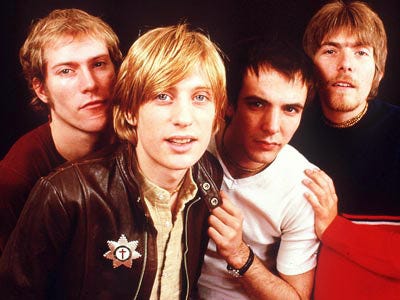
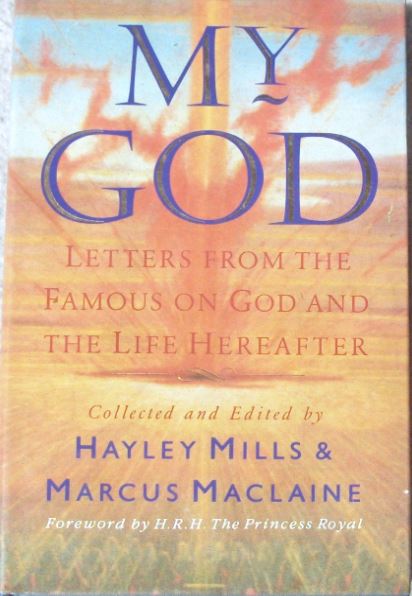
A journalist, Michael Kaplan, had been tracking the rise of New Age Nazism in his left-leaning, anti-establishment magazine, Open Eye. When Kula Shaker became successful, Mills, had said some things about democracy not working, Hitler knowing about magic, and the Swastika as an Indian peace symbol that could be pull-quoted to make him sound brazenly fascist. Kaplan, citing Open Eye, as a source, wrote two articles in the Independent that gave the false impression that Mills had apologised for ‘dabbling in Nazism’. In fact, Mills, had apologised for expressing himself in a way that people found upsetting. It’s possible that Maclaine’s views could have influenced Mills, but Maclaine was no longer a member of the band, and while Hayley Mills would split up with him around this time, no one raised concerns about her work (which included a book with Maclaine, which had a forward by Princess Anne**). Unable to weather the storm with a hit or a distraction, Kula Shaker broke up for a decade, and would never regain their popularity or momentum. If they had been novelists, playwrights, or screenwriters it’s very unlikely they would have faced that level of scrutiny over a few stray remarks and old associations.
NOTES:
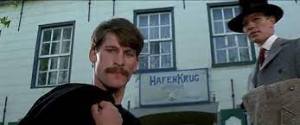
*If this picture is anything to go by – Maclaine (on the far left) retained his interest in fascism:

** My God by Hayley Mills and Marcus Maclaine:
The Independent articles can be found here and here.
Jamie Hargreaves made a great video about the Kula Shaker saga: link here
 Kay Marquis