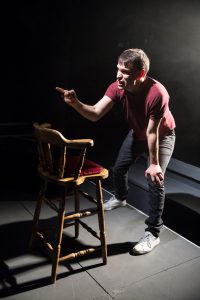
Before the pandemic, when the Edinburgh Fringe Festival was bloated but could still break a new artist, I went to review Baby Reindeer, and didn’t review it.
It was the show with the most buzz, and I hated it, or rather, I thought it was a powerful work, but I didn’t think it was doing the thing it thought it was doing. To me, this wasn’t a story about a vulnerable young comedian being stalked by a domineering older woman he met in the pub where he worked, this was the story of a violent, narcissistic, misogynist, who was attracted to a situation that gave him an excuse to unleash his pent up rage and hate.
The story didn’t begin with him kindly giving a customer a cup of tea, it began with him making a crude, sexist joke that almost any woman would have despised him for making. This particular woman took it as flirtation, and in the play there was no real explanation for why she would develop a crush on someone who said something so repulsive.
She sent him voice mails and text messages, she lurked around the pub and went to his comedy gigs. He mocked her for being old, he went to her flat, he had sexual fantasies about her, he was furious that the law wouldn’t let him beat her up, he actually did beat her up in his imagination, repeatedly howling and hitting the stage with a bar stool, until finally, sweaty and tired, he stood in a shaft of light, staring blissfully at the Gods, and revealed that she called him Baby Reindeer because she thought he had a nice backside. This compliment made him happy in a way that was sad and terrifying. His highest value was being admired.
I had a brief chat with the writer/performer, Richard Gadd, outside of the venue, and he was nice, but you could see the desperation to be liked wafting out of him. The play was based on a true story, so I didn’t want to write something that could be personally hurtful, but I didn’t want to lie about it, so I wrote nothing.
For months I thought it was the violence that bothered me, but really it was the ambition.
If he’d written a horror, then he would have been standing in the shaft of light, dripping in blood, about to take a bow, oblivious to the police waiting in the wings.
Whatever it was like in real life, on stage it gave the impression that nothing was more important than becoming famous.
I was thinking about it last year, 2025 at the time of writing, when I went to see Standing in the Shadows of Giants, a solo play with songs by Lucie Barat.
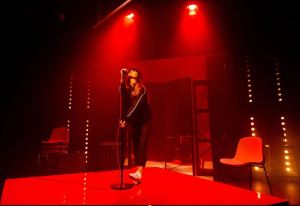
I was incapable of remembering the title and kept telling people I was going to see Standing on the Shoulders of Giants, which can’t have helped its word of mouth. It was at the Traverse and sales were stinking. It’s a venue that usually sells out during the fringe, so backstage there was that mournful empty silence that goes with a show that has not lived up to expectations. It couldn’t even console itself with good reviews, since the Guardian, which is the review that counts, was unimpressed.
It was unimpressed because it was an autobiographical story about the agony of having a famous brother, in this case, Carl Barat, who was in the Libertines. The Libertines were famous in tabloid newspapers and gossip magazines in the 2000s, and that kind of fame is shallow and shameful. People like to gawp at it like it’s a glossy zoo. Once it’s over you’re supposed to crawl into a skip and die. The family and friends of tabloid celebrities either rise above the tawdry antics by doing their own thing, or sink below them as a hanger-on.
Lucie’s main problem was that no one in the audience seemed to be interested in tabloid fame. Some of them were too young to remember the era of phone tapping and paparazzi, and judging by their tote bags, they were theatre kids more likely to know about Dolly Parton than a guitar band. In fact, I think I was the only person who liked the Libertines, and all I could remember is that they bickered and broke up. It was hard to imagine Carl’s shadow being so overwhelming that it stalled her acting career, triggered an addiction, and made her feel isolated because people only befriended her to get to the band.
She was in no doubt about the audience’s bafflement because she asked us if we knew the Libertines and got nothing but shrugs and mutterings. I nodded, but I don’t think it made a difference. That, and the empty seats, made her falter in the bits that chronicled VIP parties and album launches. Instead of looking up at fame from her day job, she was looking down at her day job from fame and it was hard to appreciate how crushing that would be when she was in the slightly worse position of starring in a flop.
Not that it deserved to be a flop.
She may have felt awkward in unsual circumstances, but her awkwardness was endearing and engaging. She was sweetly earnest about her rehab stints and her need to find her own voice. She struggled with her sexuality and feared rejection, before finding happiness with her wife and their triplets. She realised she was in no one’s shadow and that self-acceptance was worth more than chasing success.
Which is true.
But it doesn’t get you a series on Netflix.

